


What is the difference between metric and standard (imperial) fasteners in automobiles
Differences Between Metric and Standard (Imperial) Fasteners in Cars
In the world of automotive engineering, fasteners are essential components that hold together various parts of a vehicle. One key
distinction that often arises in this context is the choice between metric and standard (imperial) fasteners. Both systems have their merits and are used in different regions and applications.
This paper explores the differences between metric and standard fasteners in cars, highlighting their unique characteristics and applications.
Metric Fasteners:
Measurement System:
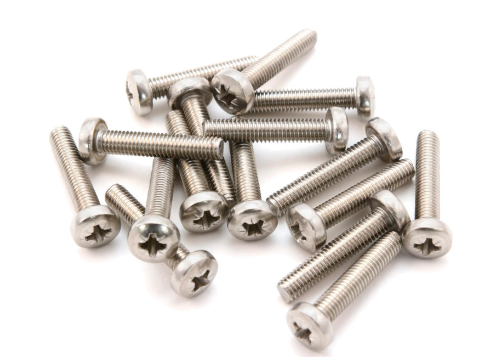
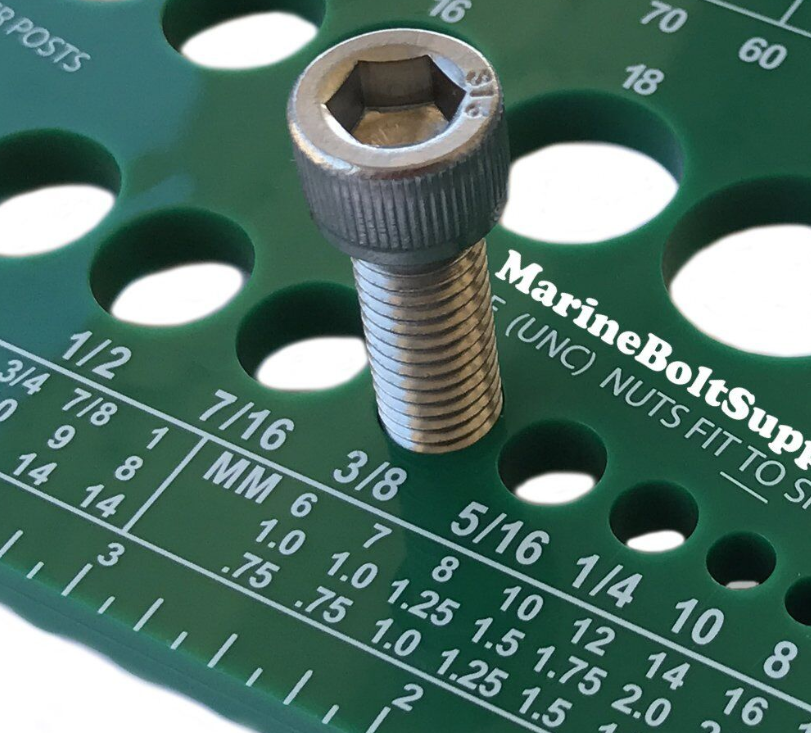
Metric fasteners use the metric measurement system, which is based on units such as millimeters (mm) and meters (m).
For instance, a metric bolt may be labeled as M10 x 1.5,
where 10 represents the nominal diameter in millimeters, and 1.5 denotes the pitch (thread spacing) also in millimeters.

2. Widespread International Use:
Metric fasteners are widely used around the world, particularly in Europe, Asia, and most of the automotive industry.
This global adoption simplifies manufacturing processes for vehicles with international markets.
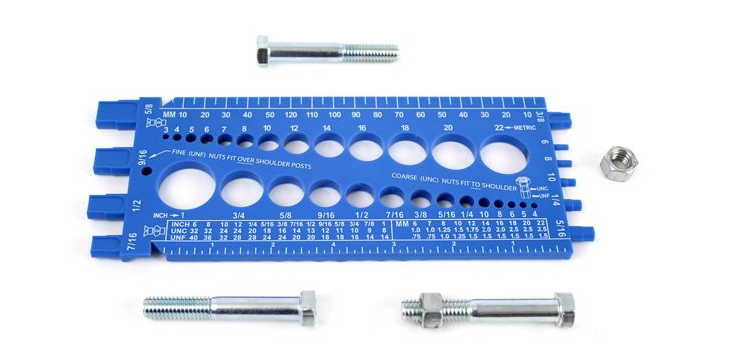
3.Incremental Sizing:
Metric fasteners typically follow an incremental size system, making it easier to find sizes in between whole numbers.
This granularity is beneficial for fine-tuning fastener selection to match specific design requirements.
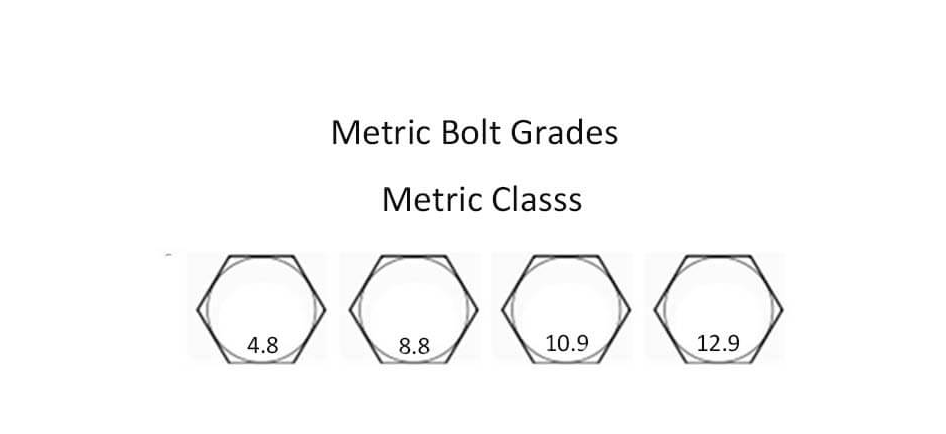
4.Metric Grades:
Metric fasteners use a class system to denote their strength, with common classes such as 8.8, 10.9,
and 12.9, indicating the tensile strength in newton per square millimeter (N/mm²).
Standard (Imperial) Fasteners:
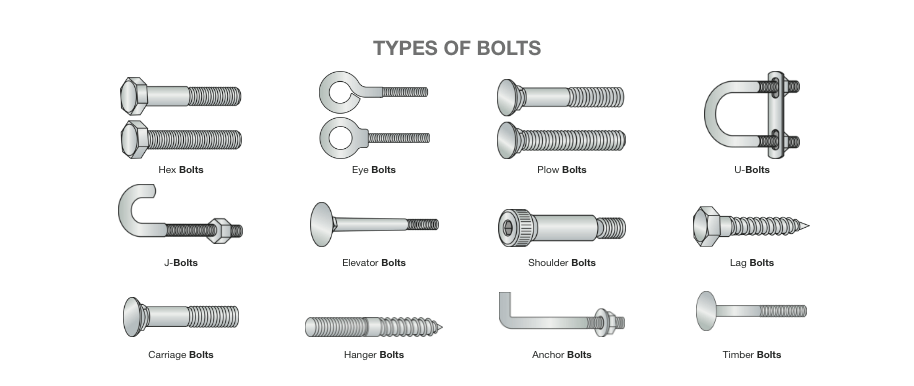
1.Measurement System:
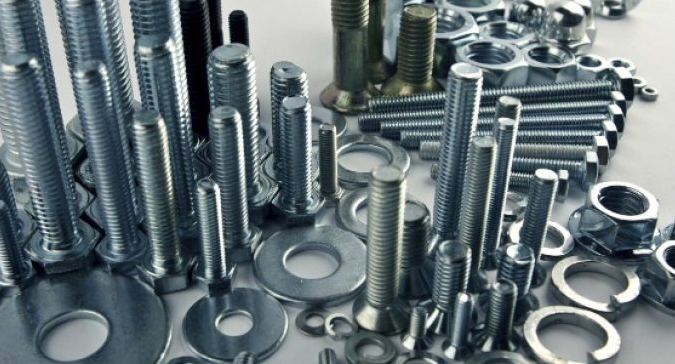
Standard fasteners use the imperial measurement system, with units such as inches and fractions of an inch. For example,
a standard bolt might be labeled as 1/4-20, where 1/4 denotes the nominal diameter in inches, and 20 represents the number of threads per inch.
2.Prevalent in the United States:
Standard fasteners are commonly used in the United States and some other countries that have historically followed imperial measurements.
This system persists in American automotive manufacturing.
3.Fractional Sizing:
Standard fasteners often use fractional sizes, which can be less precise than the metric system. For example,
the use of fractions like 1/4 inch can make it challenging to find intermediate sizes.
4.Grade Markings:
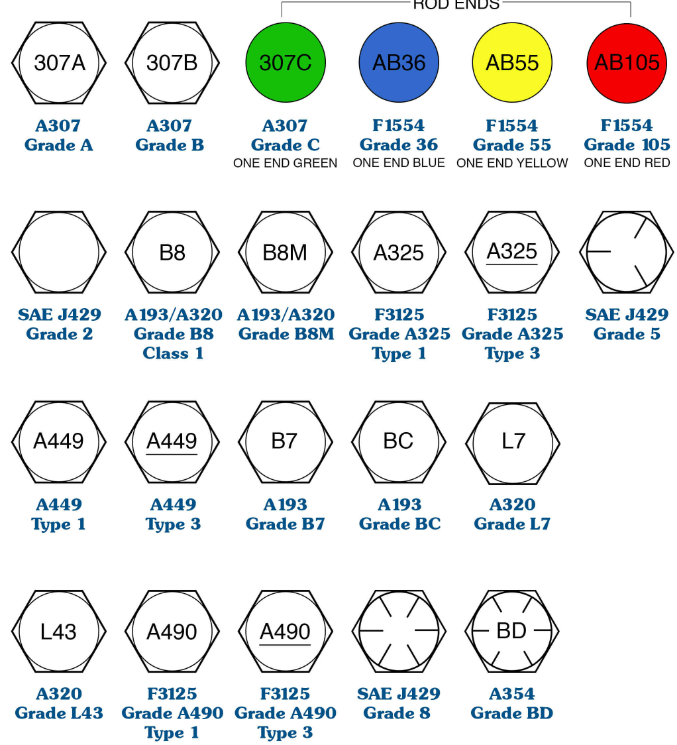
Standard fasteners use grade markings, such as Grade 2, Grade 5, and Grade 8, to indicate their strength.
These grades are based on factors like material, heat treatment, and tensile strength.
Applications and Considerations:
The choice between metric and standard fasteners in automotive applications depends on various factors:

Geographic Location: Vehicle manufacturers in different regions may use the measurement system that is most prevalent and familiar to them. For instance,
American automakers often use standard fasteners, while European manufacturers typically use metric fasteners.
Design Requirements: Specific design requirements, such as weight, size constraints, and load-bearing capacity,
can influence the choice of fasteners. Metric fasteners may be favored for applications where precise sizing and international compatibility are essential,
while standard fasteners may be preferred for legacy systems or when availability is a concern.
Interchangeability: It is important to use the appropriate fastener system as specified in the vehicle's design and engineering documents to ensure proper fit and function.
Mixing metric and standard fasteners can lead to compatibility issues.
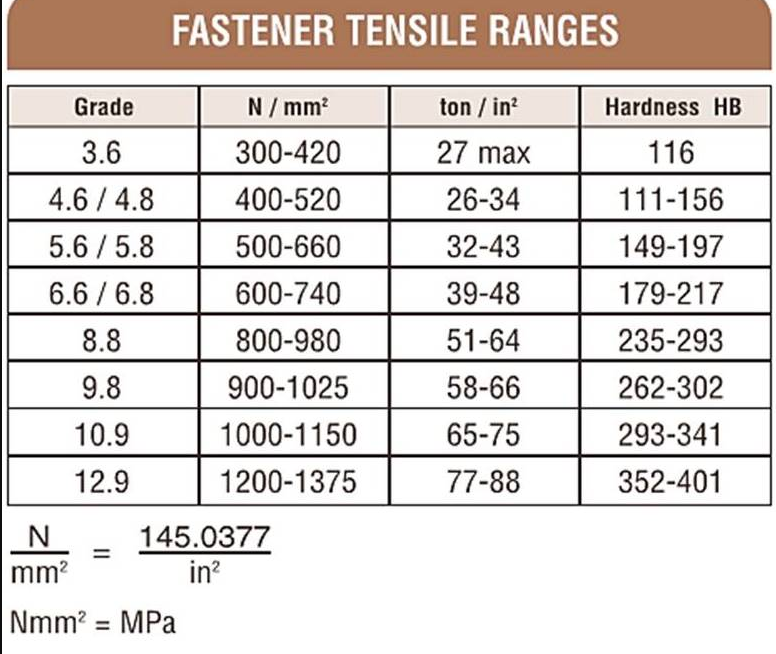
Strength Requirements: The choice of fastener should align with the strength requirements of the application.
Both metric and standard systems offer various grades and classes to meet different strength needs.
In conclusion, understanding the differences between metric and standard fasteners in cars is crucial for automotive engineers,
mechanics, and enthusiasts. The choice between these systems often depends on geographic location,
design specifications, and application requirements.
Proper selection and use of fasteners are vital to ensure the safety, integrity, and performance of automotive components and systems.
Q1: Are you trading company or manufacturer?
A1:We are factory.
Q2:Can I visit you factory?
A2:Yes! Warmly welcome to visit our factory. It would be Great if you can inform us in advance.
Q3:The quality of your products?
A3:The company has advanced production and testing equipment. Every products will be 100% inspected by our QC department before shipment.
Q4:How about your price?
A4:High quality products with reasonable price. Please give me a inquire, I will quoted you a price for you refer at once.
Q5:Could you provide free samples?
A5: We can provide free samples for standard fastener, But the clients will pay the Express charges.
Q6: What’s your Delivery Time?
A6: Standard parts: 7-15 days, Non-standard parts 15-25 days, We will make the delivery as soon as possible with the guarantee quality.
Q7: How should I order and make payment?
A7: By T/T, for sample 100% with the order; for production, 30% paid for deposit by T/T before production arrangement the balance to be paid before shipment.

Our defect rate standard is 0 PPM.
Our production range includes CNC processing center, automatic lathing, automatic milling, wire cutting, powder metallurgy processing and assembly of metal parts with plastic parts.
Quick Links
Products
Contact Us
 WhatsApp: +86 13924354629
 Email: info3@dgchuanghe.com
 Tel: 0086-13924354629
 Address: RM302,No.4 building Lizhou industrial Park, Shangshanqi, Zhushan District, Dongcheng Town, Dongguan City, China